
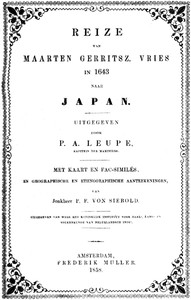
Reize van Maarten Gerritsz. Vries in 1643 naar het Noorden en Oosten van Japan
Let's get this straight: this isn't a novel. It's a historical detective story presented as an edited travelogue. The core of the book is the 1643 journal of Maarten Gerritsz. Vries, a Dutch explorer sent by the VOC (Dutch East India Company). His mission was simple: sail north from Japan, find riches, and map new territories. What he actually did was sail into a mess of fog, ice, and uncharted waters. He believed he found the edges of two new lands—'Company Land' and 'Staten Land'—and meticulously recorded their coasts. For generations, these places were real on every respectable map.
The Story
The 'plot' follows two timelines. First, we experience Vries's grueling voyage through his own words—the cold, the strange encounters with the Ainu people, the frustrating navigation. Then, we jump to the 19th century, where Philipp Franz von Siebold, while trapped in Japan, stumbles upon Vries's report. Siebold, a brilliant and curious man, pieces together that the lands Vries charted were actually the islands of Urup and Iturup (part of the Kuril chain). Vries had mapped them incorrectly, creating a geographic legend. Siebold's commentary wraps around the old journal, explaining the mistake and its huge implications.
Why You Should Read It
You should read this because it makes history feel immediate and human. It's not about dry dates; it's about a sailor trying his best with a compass and a guess, and a scholar, centuries later, shouting, 'Wait, I think he got it wrong!' You feel the pressure Vries was under and Siebold's thrill of discovery in a library. It shows how knowledge is built—and sometimes corrected—across time. The real tension isn't on the high seas, but in the slow, stubborn spread of an error.
Final Verdict
Perfect for history buffs who love real-life mysteries, or anyone fascinated by old maps and how we understand our world. If you enjoy stories about forgotten journeys and the people who rescue them from obscurity, you'll find this compelling. It's a niche but incredibly satisfying read that proves truth can be stranger than any fiction.
No rights are reserved for this publication. Enjoy reading and sharing without restrictions.
Amanda Williams
1 year agoFive stars!
Joshua Ramirez
1 year agoBased on the summary, I decided to read it and it manages to explain difficult concepts in plain English. Truly inspiring.