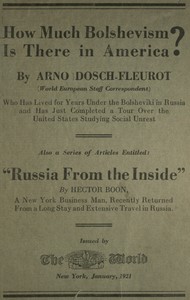
How much Bolshevism is there in America? : Also a series of articles entitled…
Published in 1920, this book captures America at a raw, nervous moment. World War I is over, but a new kind of fear has settled in. The Bolsheviks have taken over Russia, and headlines are screaming about revolution spreading. Hector J. Boon sets out to answer the question in his title not with dry statistics, but by hitting the streets. He acts like a reporter on a beat, trying to gauge the national temperature.
The Story
There isn't a traditional plot with characters. Instead, Boon takes us on a tour of American anxiety. He looks at labor strikes and asks if they're about fair wages or a plot to overthrow the government. He examines newspapers and pamphlets, wondering if they're spreading dangerous ideas. He listens to the speeches of radicals and the worries of the establishment. The 'story' is his journey to measure this invisible threat. Is Bolshevism a real, growing force in the U.S., or is it mostly a ghost—a scary idea used to attack any kind of change or protest? The book is built from a series of his articles, so it moves quickly from one scene of this national drama to the next.
Why You Should Read It
This book is fascinating because it's a snapshot of a national panic. Boon writes with the urgency of someone living through it, which makes it incredibly engaging. You're not getting a historian's calm analysis written decades later; you're getting the live, unfiltered reaction. What struck me most was the echo effect. The debates he records—about patriotism, about the role of the media, about the line between dissent and disloyalty—are word-for-word the same debates we have today. It's both comforting and unsettling to see that our current political struggles aren't new. It makes you think about how fear shapes politics, then and now.
Final Verdict
Perfect for history buffs who like primary sources, or for anyone who enjoys current politics and wants a deep background on where our arguments come from. It's not a long or difficult read, but it packs a punch. You won't agree with all of Boon's perspectives (some feel very dated), but that's part of the fun. Think of it as finding a great, opinionated thread from 1920 Twitter, printed and bound. If you want to understand the roots of America's red scares and culture wars, this is a surprisingly lively place to start.
This digital edition is based on a public domain text. It is now common property for all to enjoy.