
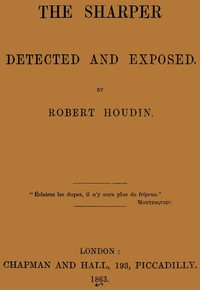
The Sharper Detected and Exposed by Jean-Eugène Robert-Houdin
Let's set the scene: Paris, the 1800s. Gambling salons are glittering traps, and card sharps (professional cheats) are cleaning out the wealthy and the naive. Enter Jean-Eugène Robert-Houdin, a clockmaker turned legendary stage magician. He wasn't just a performer; he was a scientist of illusion. Appalled by the real-world fraud he saw, he decided to fight back with the best weapon he had: knowledge.
The Story
This isn't a novel with a single plot. Think of it as a series of brilliant, investigative episodes. Robert-Houdin, using his unique skills, essentially goes on a secret mission. He visits gambling houses, watches the sharps at work, and then uses his deep understanding of mechanics and misdirection to reverse-engineer their cons. The book is his full report. He walks you through, step-by-step, how cheaters marked cards, manipulated dice, and used complex sleight-of-hand to control every deal. He explains the tools of the trade—doctored decks, reflective rings, hidden mirrors—and the psychological plays that make the marks (the victims) suspect nothing. It's a systematic breakdown of fraud, written to arm the public.
Why You Should Read It
The magic here is in the author's voice. You can feel Robert-Houdin's mix of professional admiration for the skill involved and moral outrage at its use. He's not a dusty professor; he's a showman revealing the greatest trick of all: the one that empties your wallet. Reading it, you gain a weird double vision. You learn to appreciate the incredible dexterity and planning of a successful cheat, while also feeling a surge of satisfaction knowing exactly how to spot them. It turns you from a potential victim into an informed observer. It’s also a fascinating snapshot of social history, showing just how sophisticated (and widespread) organized cheating was in polite society.
Final Verdict
Perfect for true crime fans who enjoy a historical angle, magic enthusiasts who want to see the roots of modern illusion, and anyone who loves a good, real-life detective story. If you enjoy shows about heists or cons, this is the original source material. It’s a short, captivating read that makes you feel smarter and a bit more wary of a friendly game of cards. A genuine hidden gem from the past that still feels clever and relevant.
This text is dedicated to the public domain. Access is open to everyone around the world.
Ashley Clark
1 year agoSolid story.
Christopher Brown
3 months agoLoved it.
Joseph Young
6 months agoAfter hearing about this author multiple times, it challenges the reader's perspective in an intellectual way. Worth every second.
Logan Ramirez
5 months agoThis is one of those stories where the storytelling feels authentic and emotionally grounded. A valuable addition to my collection.







Kenneth King
7 months agoGreat read!